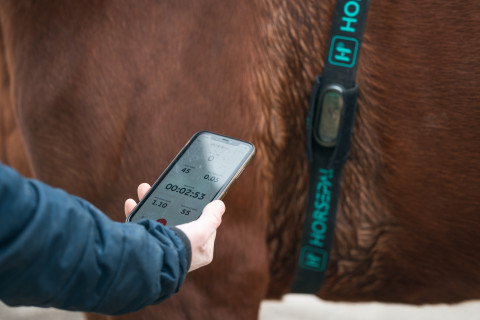
In the previous blog, I told you about logging the distance, duration, average speed, and elevation of your training sessions. Adding indexes for climb and canter gives a selection of great parameters to compare training and see how you progress. But these numbers do not tell you anything about how your horse actually experiences the effort du...
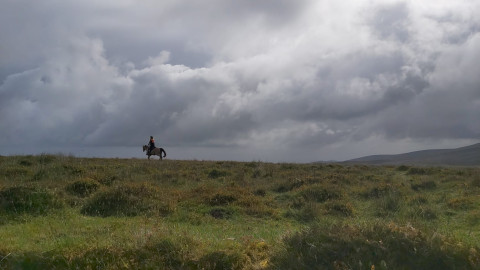
What a year. What a horse!A total of 8 rides ( 9 ride days) and 460 km (the most she's ever done), nearly 9000m (!!) elevation including the Golden Horseshoe 80 km and Red Dragon 80 km! In 2022 I have solely focused on competing Asphodele Larzac, my small (but huge ) amber champagne part bred Arab mare. So why is she both small ...
This is the follow up webinar to the "Understanding the use of a heartrate monitor" Webinar, both are fine as stand alone, but are very much part of each other if you really want to know about how to really make the best of riding with a heartrate monitor. The first was all about the different monitors available, what it can measure and some theory about physiology of the horse.
In this webinar we are going to use the monitor, working with baselines, the effect increased intensity of work has and how to work with training phases and perhaps if at all needed, with some interval work.
I specifically address how hill work can create it's own low speed high intensity work and how you can combine that to high intensity work on the flat (which is what all apps and monitors are really designed for). I have used my own horses for a few case studies to make it really understandable.
Have a look!
This is the second webinar in a trilogy about "Training smarter, not harder". In the previous one we focused on how every horse is different, because of its ability, its weaker links, circumstances and management.
In this recorded webinar we will go into what training actually is, how we know we are actually training, how much rest our horse needs after a training and when we are ready to train again, or "just work" our horse.
Have a look: